Circularity is a fundamental concept when it comes to sustainability in the field of plastic products. This aspect is directly related to the resources needed for manufacturing and the management of the waste generated. We are essentially discussing the life cycle of these products: they are manufactured from specific raw materials, transported to the place where they will be used, and fulfil their corresponding function. But what happens next? The products, once they meet their useful life, can be managed as waste or returned to the starting point: the use of these as raw material for the manufacture of new products. This implies both the use of materials for production and the reduction of plastic waste. It even has a positive impact on the sustainability in transport, since these used products can be collected on the same trip in which they are replaced by new ones, thus taking advantage of the return trip. The transition to this production model is already a reality and will constitute the basis for reducing the ecological footprint of the plastic manufacturing industry.
At this point, it is important to consider that there are many types of plastic products and many implications for the management of this waste (development of the necessary structures, costs, etc.) and, therefore, this circular model must continue to develop gradually, in accordance with the needs of each sector. In this post, we will see how the circularity model of products manufactured in ITM is approached through the recycling process: a resource optimization model that is conceived from the product design phase.
Table of contents
- ITM products Concepts of Ecodesign and Upcycling
- Phases of the recycling process
2.1. Replacement of the trolleys and baskets used at the points of sale and transfer to the ITM facilities on the return trip
2.2. Separation and classification of components
2.3. Shredding of parts
2.4. Injection of recycled material
2.5. Loading and shipping of new trolleys and baskets
ITM products Concepts of Ecodesign and Upcycling
Before detailing the recycling process, it is necessary to specify the type of materials and products that are processed at ITM and that will be subjected to the mentioned process. ITM manufactures products from materials such as polypropylene (PP), polyethylene (PE) and polyamide (PA). These types of materials are characterized by their strength and durability, allowing the manufacture of long-lasting products that, in turn, can be reused to remanufacture new products that largely maintain their features and quality, or can even be improved ( Upcycling ).
However, according to the type of product to be manufactured, special attention should be paid to the possible differences that this post-consumer recycled raw material may have compared to virgin material, both at the manufacturing level (fluidity index, etc.) as well as in terms of the use of the final product (impact resistance, chemical resistance, etc.). For example, if a plastic product is intended to carry a given load, it should be considered whether the recycled material gives the product a lower mechanical strength, and if so, virgin and recycled material can be mixed in different percentages at the time of injection, in order to achieve a final product that maintains its performance.
Furthermore, ITM products are conceived from the perspective of Ecodesign. In addition to being manufactured with highly recyclable materials, they are products made up of two or three main parts, designed to be easy to assemble and disassemble, so that separating the components for recycling is very simple. Such items include shopping trolleys and baskets, shipping boxes and plastic pallets.
Phases of the recycling process
1. Replacement of used trolleys and baskets at the points of sale and transfer to ITM facilities on the return trip
When the products at the points of sale have reached the end of their useful life and need to be replaced, we send the new products to these points and collect the used ones to take them to ITM’s recycling plant, thus taking advantage of the return trip of the trucks.
Once the used products have been unloaded, they are stored for later transfer to the assembly and disassembly area.
2. Separation and classification of components
3. Shredding of parts
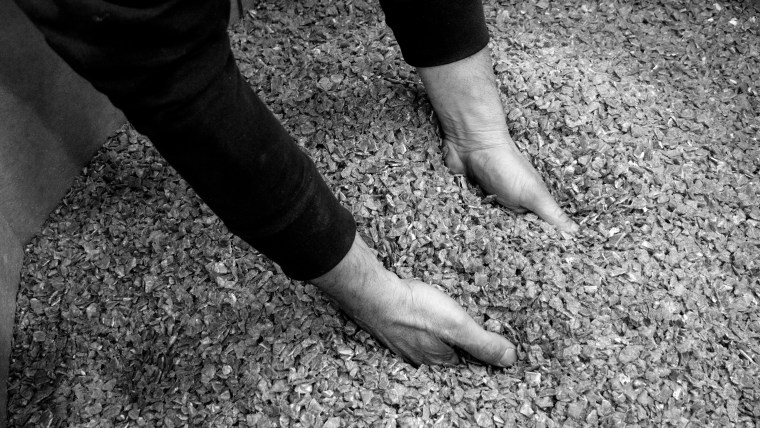
When all components are properly separated and sorted, it is time to shred the plastic parts. This shredded material will then be used in the injection moulding process to obtain new parts. This process involves several steps and requires specific machinery. The steps, as shown in the video and briefly described, are the following:
Tearing
Granulate
Dry cleaning of the material
Material collection
Finally, this clean shredded material is conveyed to a new cyclone separator that compensates the air pressure to slow down the high velocity at which the material is transported, allowing the material to fall into the bag that collects the material, while the air is released from the top.
4. Injection of the recycled materials
Finally, this shredded and cleaned plastic is fed into the injection moulding machines to create new products.
A fundamental aspect of the recycling process carried out at ITM is the total control of the material with which we work, i.e. its traceability. As described above, we know the products well from their manufacture, we take care of their return after use and we supervise the entire recycling process up to the injection of new parts. Therefore, apart from carrying out the corresponding analyses of the shredded material obtained, we are completely sure that its properties are optimal to obtain a high quality final part made of post-consumer recycled plastic in its entirety, or in a certain percentage.
5. Loading and shipping of new trolleys and baskets
The recycled trolleys and baskets are now ready to be sent to new outlets, where they will be given a new life.